Positive Thinking Practice Journal: A Tool for Daily Growth and Mindset Shifts
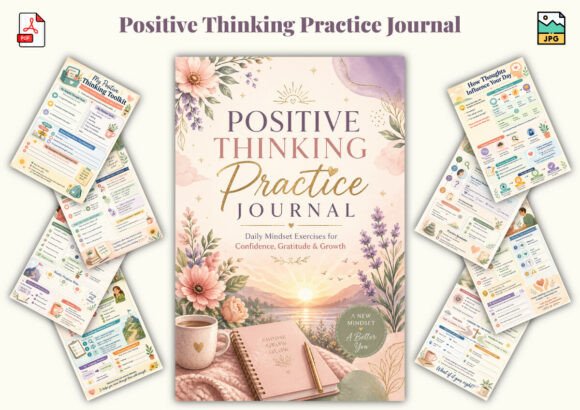
In today's fast-paced world, maintaining a positive mindset can be challenging. Stress, uncertainty, and daily pressures often cloud our thoughts, making it difficult to stay optimistic and focused on growth. That's where the Positive Thinking Practice Journal comes in—a beautifully designed 31-page printable workbook that helps individuals build healthier thinking patterns, foster gratitude, and encourage self-reflection. This journal is more than just a collection of pages; it's a practical tool that supports mental wellness and personal development through engaging exercises and thoughtful prompts.
The Positive Thinking Practice Journal is ideal for anyone looking to cultivate a more positive outlook on life. Whether you're dealing with anxiety, seeking motivation, or simply wanting to improve your overall well-being, this journal offers a structured yet flexible approach to developing positive thinking habits. It’s especially useful for adults who are interested in self-care, mindfulness, and personal growth, as well as teens navigating emotional challenges and transitions.
One of the key challenges people face when trying to adopt a more positive mindset is consistency. Without structure, it's easy to fall back into old thought patterns. The Positive Thinking Practice Journal addresses this by providing daily prompts and activities that encourage reflection and intentional thinking. Each page is crafted to guide users through various aspects of positive thinking, from identifying negative self-talk to reframing situations in a more constructive light.
For example, the journal includes guided exercises that help users recognize and challenge unhelpful thoughts. These exercises are based on cognitive-behavioral principles, making them both effective and accessible. Users can also engage in gratitude practices, which have been shown to improve mood and increase feelings of well-being. By regularly writing down things they're grateful for, individuals can shift their focus from what's going wrong to what's going right in their lives.
Another valuable aspect of the Positive Thinking Practice Journal is its inclusion of action planning and habit trackers. These tools allow users to set realistic goals and track their progress over time. For instance, someone might use the journal to create a plan for reducing stress or improving sleep quality. The habit tracker pages provide visual feedback, making it easier to stay motivated and committed to positive changes.
Users of all ages and backgrounds can benefit from the Positive Thinking Practice Journal. Adults may find it helpful for managing work-related stress or improving relationships, while teens can use it to navigate the emotional ups and downs of adolescence. Educators and therapists may also appreciate the journal as a resource for classroom SEL (Social-Emotional Learning) activities or counseling sessions. Its warm pastel design makes it visually appealing, encouraging regular use and engagement.
What sets the Positive Thinking Practice Journal apart is its balance of structure and flexibility. While it provides clear guidance through its exercises and prompts, it also allows users to personalize their experience. Some may prefer to follow the journal in order, while others might pick and choose pages that resonate most with them. This adaptability ensures that the journal remains relevant and useful for a wide range of users.
When using the Positive Thinking Practice Journal, it's important to approach it with an open mind and a willingness to reflect honestly. Positive thinking isn't about ignoring difficulties but rather about responding to them in a more constructive way. The journal encourages users to explore their thoughts, emotions, and behaviors without judgment, fostering a deeper understanding of themselves and their needs.
Additionally, the journal can be used as part of a larger self-improvement routine. Pairing it with other practices such as meditation, exercise, or journaling can enhance its effectiveness. For those new to positive thinking, starting with one or two pages a day may be more manageable, gradually increasing the frequency as confidence and comfort grow.
The Positive Thinking Practice Journal is not only a tool for individual use but also a great resource for group settings. Friends, family members, or coworkers can use it together to support each other's growth and development. Group discussions around the journal's prompts can lead to meaningful conversations and shared insights, reinforcing positive thinking habits in a supportive environment.
In summary, the Positive Thinking Practice Journal offers a comprehensive and accessible way to develop positive thinking habits. With its engaging exercises, reflective prompts, and beautiful design, it serves as a valuable companion for anyone looking to build a healthier mindset and inspire daily growth. Whether used alone or with others, this journal has the potential to make a lasting impact on mental wellness and personal development.