Graphic Design Workbook for Kids: A Creative Learning Tool for Young Designers
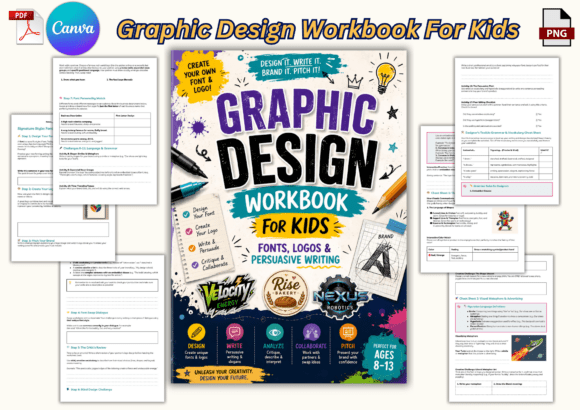
The Graphic Design Workbook for Kids is an innovative educational resource designed to introduce children aged 8–13 to the fundamentals of graphic design, branding, and persuasive writing in a fun and interactive way. This workbook blends artistic creativity with literacy and critical thinking, making it a versatile tool for homeschooling, classroom use, tutoring, and independent learning. Its unique approach allows young learners to explore visual communication while developing essential skills that are valuable across multiple disciplines.
What sets this workbook apart is its comprehensive structure, which includes printable PDF pages, high-quality PNG images, and a variety of activities that cater to different learning styles. The content is carefully curated to be both engaging and educational, ensuring that children remain motivated throughout their creative journey. From designing logos to crafting persuasive messages, each activity is designed to build confidence and competence in young creators.
Key Features of the Graphic Design Workbook for Kids
The Graphic Design Workbook for Kids offers a wide range of features that make it a standout choice among similar resources. Some of the most notable aspects include:
- Interactive worksheets and creative prompts: These encourage hands-on engagement and help reinforce key concepts through practice.
- Graphic design and branding activities: Children learn how to create logos, color schemes, and visual identities that reflect specific themes or ideas.
- Persuasive writing and grammar exercises: These tasks help students develop their ability to communicate effectively through written language.
- Figurative language and vocabulary activities: These lessons enhance linguistic skills by exploring metaphors, similes, and other expressive techniques.
- Color psychology and visual communication lessons: Students gain insight into how colors influence perception and emotions.
- Logo critique and peer review challenges: These activities promote collaboration and critical thinking by encouraging students to evaluate each other's work.
- Creative mascot and metaphor drawing tasks: These exercises allow children to express their imagination while practicing visual storytelling.
- Answer key included: This provides parents, teachers, or tutors with a clear reference to assess progress and offer guidance when needed.
With 11 beautifully designed pages, including a front and back cover, the workbook is formatted to be visually appealing and easy to navigate. Its size (6.25 x 9.25 inches) makes it suitable for both digital and print use, and the printable PDF format ensures accessibility across various platforms.
How Does This Workbook Compare to Other Resources?
When evaluating options for teaching graphic design to children, it’s important to consider what each resource offers in terms of content, structure, and educational value. The Graphic Design Workbook for Kids stands out by combining visual design principles with literacy and communication skills, which is not always the case with other similar products.
Many traditional art workbooks focus primarily on drawing or coloring without integrating broader design concepts such as branding or visual storytelling. In contrast, this workbook introduces children to the idea of creating a cohesive visual identity, which is a crucial skill in professional design. It also incorporates persuasive writing elements, which helps bridge the gap between visual and verbal communication—a feature that few other resources emphasize.
Another advantage of this workbook is its adaptability. Unlike some specialized design software or apps that require technical knowledge or subscriptions, this workbook is accessible to anyone with basic printing capabilities. It is particularly well-suited for younger learners who may not yet have experience with digital tools.
However, it is worth noting that this workbook may not be ideal for those seeking advanced design training or a more structured curriculum. For example, if a child is already familiar with basic design principles and is looking for more complex projects, they might benefit from additional resources that offer more in-depth instruction or access to design software.
Best-Fit Situations for Using the Graphic Design Workbook for Kids
The Graphic Design Workbook for Kids is best suited for situations where the goal is to introduce children to the basics of design in a playful and educational manner. It works well in the following contexts:
- Homeschooling environments: Parents who are teaching their children at home can use this workbook as part of a broader arts or communications curriculum.
- Classroom settings: Teachers can incorporate the workbook into art, English, or technology classes to provide a multidisciplinary learning experience.
- Tutoring sessions: Tutors working with students who have an interest in design or writing can use this workbook to support their development in these areas.
- Creative learning programs: This workbook is an excellent fit for after-school programs, summer camps, or enrichment activities focused on creativity and problem-solving.
- Independent practice: Children who enjoy working on their own can use the workbook to explore design and writing at their own pace.
In these scenarios, the workbook serves as a flexible and engaging tool that supports both artistic and academic growth. However, for children who are highly advanced in design or writing, or for educators looking for a more comprehensive curriculum, additional resources may be necessary.
Considerations When Choosing This Workbook
While the Graphic Design Workbook for Kids has many strengths, there are a few considerations to keep in mind before deciding whether it is the right choice for your needs:
- Age appropriateness: Although the workbook is designed for children aged 8–13, the difficulty level may vary depending on the individual learner. Some activities may be more challenging for younger children, while others may be too simple for older students.
- Depth of content: This workbook provides an introduction to design concepts but does not go into great detail about advanced topics such as typography, layout, or digital design tools.
- Format limitations: While the printable format is convenient, it does not offer the same interactive experience as digital design software or online courses that provide real-time feedback or tutorials.
These factors should be taken into account when comparing this workbook to other options. If you're looking for a more in-depth or technically oriented approach to teaching graphic design, you may want to explore alternative resources such as design software tutorials, online courses, or more advanced workbooks that focus specifically on digital design.
In conclusion, the Graphic Design Workbook for Kids is an excellent choice for introducing young learners to the world of graphic design, branding, and persuasive writing. Its combination of artistic and literary elements makes it a unique and valuable resource for educators, parents, and students alike. While it may not be the best option for every situation, it is well-suited for those seeking a fun, interactive, and educational way to explore creative expression and communication skills.